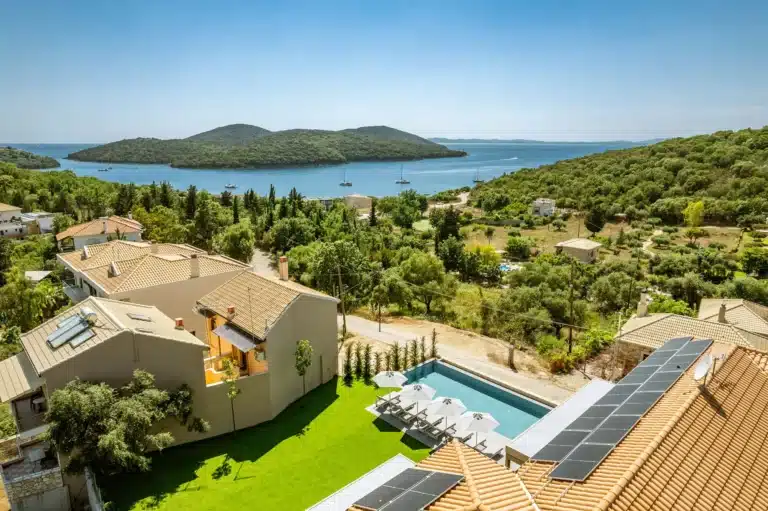
Among the olive groves and pine trees that slope down from the hills of Sivota to the sea, there is a vineyard you cannot see from the road. There are no signs to announce it and no grand entrance. Yet it is one of Thesprotia’s most interesting winemaking projects, and something of a local secret among those who know it.
Gorgolis Vineyard is the work of Aris Gorgkolis, a winemaker who has spent more than twenty years following the principles of sustainable cultivation and permaculture. It is a smaller, less familiar name than the wine regions of Zitsa or Metsovo, and that is part of its appeal. This boutique winery works on a very small scale, with minimal intervention and an emphasis on staying true to its terroir — the particular character of this patch of land in Sivota.
The setting: why Sivota matters to these wines
Mention wine from Epirus and thoughts often turn to Zitsa, with its Debina grapes and sparkling wines, or to Metsovo and the Averoff Cabernet Sauvignons. But Epirus offers more than one kind of landscape. It is one of Greece’s cooler, more mountainous winegrowing regions, with a continental climate inland and the influence of the Ionian Sea to the west.
Sivota lies in that coastal zone: on hills descending towards the shore, where sea breezes cool the vines in summer and the nearby Ionian softens the winters. This is neither a mountain vineyard at 700 metres nor a hot inland site. It sits somewhere between the two, and that balance comes through in the wines.
This microclimate makes room for an interesting mix of grape varieties. As the wines below show, Aris Gorgkolis works with both Greek grapes — Assyrtiko and Xinomavro — and international varieties such as Sauvignon Blanc, Merlot and Muscat d’Hamburg. His range offers another way to discover the wines of Epirus.
Permaculture: what it means in a vineyard
The word ‘permaculture’ appears readily on wine labels and winery websites. It is worth looking at what it means in practice, and why a winemaker would choose to work this way for two decades.
At its heart, permaculture is a holistic approach to cultivation that draws on natural ecosystems. In a vineyard, this means practical choices such as:
- Cover crops: keeping legumes, grasses or naturally occurring plants between the rows rather than leaving the soil bare. These help enrich the soil and protect it from erosion, with legumes also contributing nitrogen.
- No synthetic herbicides or fertilisers: relying on mechanical and biological methods instead.
- Biodiversity: allowing wild plants and animals around the vineyard to act as natural allies against pests.
- Minimal soil disturbance: avoiding deep ploughing to preserve the soil’s structure and the life within it.
- Compost and organic matter: used in place of chemical fertilisers.
The aim goes beyond environmentally conscious farming. It is to grow grapes that reflect their soil, with deeper roots, greater resilience to heat and stress, and aromatic complexity. With good fruit arriving in the cellar, the winemaker can do less: fewer interventions, fewer additions and a lighter touch.
This is precisely the philosophy Aris Gorgkolis describes: excellent raw materials, minimal intervention.
The five wines: what to expect in your glass
The Gorgolis Vineyard range is deliberately small: five wines, each with a distinct character. They are also sold under the name Gorgolis Private Collection, reflecting the winery’s small production.
Le Blanc — Sauvignon Blanc & Assyrtiko
A blend that brings together the expressive aromas of Sauvignon Blanc and the structure and acidity of Greek Assyrtiko.
- Colour: Bright golden yellow
- Nose: Vivid aromas of citrus blossom, chamomile, bergamot, peach and pineapple
- Palate: Balanced acidity
- Bottle: 750ml
Sauvignon Blanc and Assyrtiko make a well-established pairing in modern Greek winemaking: Sauvignon brings fruit and freshness, while Assyrtiko provides structure and ageing potential. Try it with fish, seafood or light Mediterranean dishes.
Le Rose — Xinomavro
A Xinomavro rosé with red fruit at the forefront and balanced acidity.
- Colour: Deep pink
- Nose: Raspberries, strawberries and cornelian cherries
- Palate: Balanced acidity
- Bottle: 750ml
Aris Gorgkolis handles the grapes gently, avoiding heavy pressing and extraction from the stems. Try it with salads, Mediterranean starters, tomato-based dishes or vegetables cooked in olive oil.
Amour d’Été — Merlot
The softer, more summery expression of Merlot in the range.
- Colour: Deep purple
- Nose: Cherry, spice, chocolate, vanilla and caramel
- Palate: Balanced acidity and soft tannins
- Bottle: 750ml
The wine spends time in amphorae, as Aris Gorgkolis explains. In the glass, notes of vanilla and caramel complement cherry, spice and chocolate in a Merlot with soft tannins.
Le Rouge — Merlot
The more structured expression of Merlot in the range.
- Colour: Deep purple
- Nose: Cherry, spice and chocolate
- Palate: Balanced acidity with a firm tannic character
- Bottle: 750ml
The tannins here are more pronounced than in Amour d’Été. This is a wine for red meat, slow-cooked dishes and mature cheeses, and one that benefits from a little time in the glass.
Vin De Liqueur — Merlot & Muscat d’Hamburg
The most unusual wine in the range is a sweet red combining Merlot with Muscat d’Hamburg, an aromatic table-grape variety.
- Colour: Deep purple
- Nose: Intense and complex: red rose, small red fruits, cherry, spice, chocolate and vanilla
- Palate: Sweetness and rounded tannins
- Bottle: 500ml
This is a wine for the end of a meal: alongside a chocolate dessert, hard cheeses or a coffee, or simply enjoyed on its own as a vin de meditation. Sweet reds are a less common sight among Greek wines, and this blend gives the style an individual character.
Where to taste the wines of Gorgolis Vineyard
In Sivota itself, Gorgolis Private Collection wines are presented at dedicated tastings at Lush Wine & Deli. This wine bar and delicatessen in the village organises tasting experiences centred on the winery’s range.
- Location: Sivota 46100
- Telephone: +30 694 810 9283
- Email: info@lushwine.wine
- Website: www.lushwine.wine
- Opening hours: Monday–Tuesday 10-14 & 17-23, Wednesday 10-01, Thursday 17-00, Friday all day, weekends 10-14 & 17-23
Tastings welcome 6 to 12 people per session and are accompanied by a carefully prepared charcuterie board with selected cured meats, cheeses, homemade chutneys and local products. Advance booking is required. Each pairing is designed to bring out the character of the wine, and tasting the two Merlots side by side is a particularly useful way to appreciate their differences.
A tasting offers a rounded introduction to Gorgolis: you can try the full range, hear the story behind each wine and explore it alongside carefully chosen food.
Why it deserves a place in a visit to Sivota
Most people come to Sivota for the sea: Bella Vraka, Mega Ammos, Mega Drafi and boat trips to Paxos. Fewer realise that these same hills overlooking the Ionian are also home to a small, quietly dedicated winery, with its own contribution to the region’s wines.
For visitors who enjoy wine, Gorgolis Vineyard brings together three appealing things:
- A winemaker with a clear philosophy — permaculture and minimal intervention, practised daily for twenty years.
- Distinctive blends that are not easy to find elsewhere: Sauvignon Blanc with Assyrtiko, or sweet Merlot with Muscat d’Hamburg.
- A small, personal tasting experience — 6 to 12 people in a village wine bar, tasting wines that have travelled only a few kilometres from vineyard to glass.
If getting to know a place means discovering what it grows, cooks and drinks, a Gorgolis tasting at Lush is well worth considering. It offers a chance to explore a local side of Sivota beyond its busy beaches and summer crowds.
Gorgolis Vineyard: contact and information
- Website: gorgolis-vineyard.gr
- Facebook: Gorgolis Vineyard
- Instagram: @gorgolisvineyard
- Winemaker: Aris Gorgkolis
- Vineyard location: Hills of Sivota, Epirus
- Tastings: Lush Wine & Deli, Sivota — tel. +30 694 810 9283
IgoumenitsaSTAY community
Real visitor experiences, all in one place
Find practical, first-hand tips from travellers and share what made your own visit useful.
- Read by our team before publication
- Email stays private
- Linked to the exact place visited
Write a review for a place
Search for the beach, village, museum, restaurant or stay you visited.